TITANS: ROAD TO THAILAND 2023

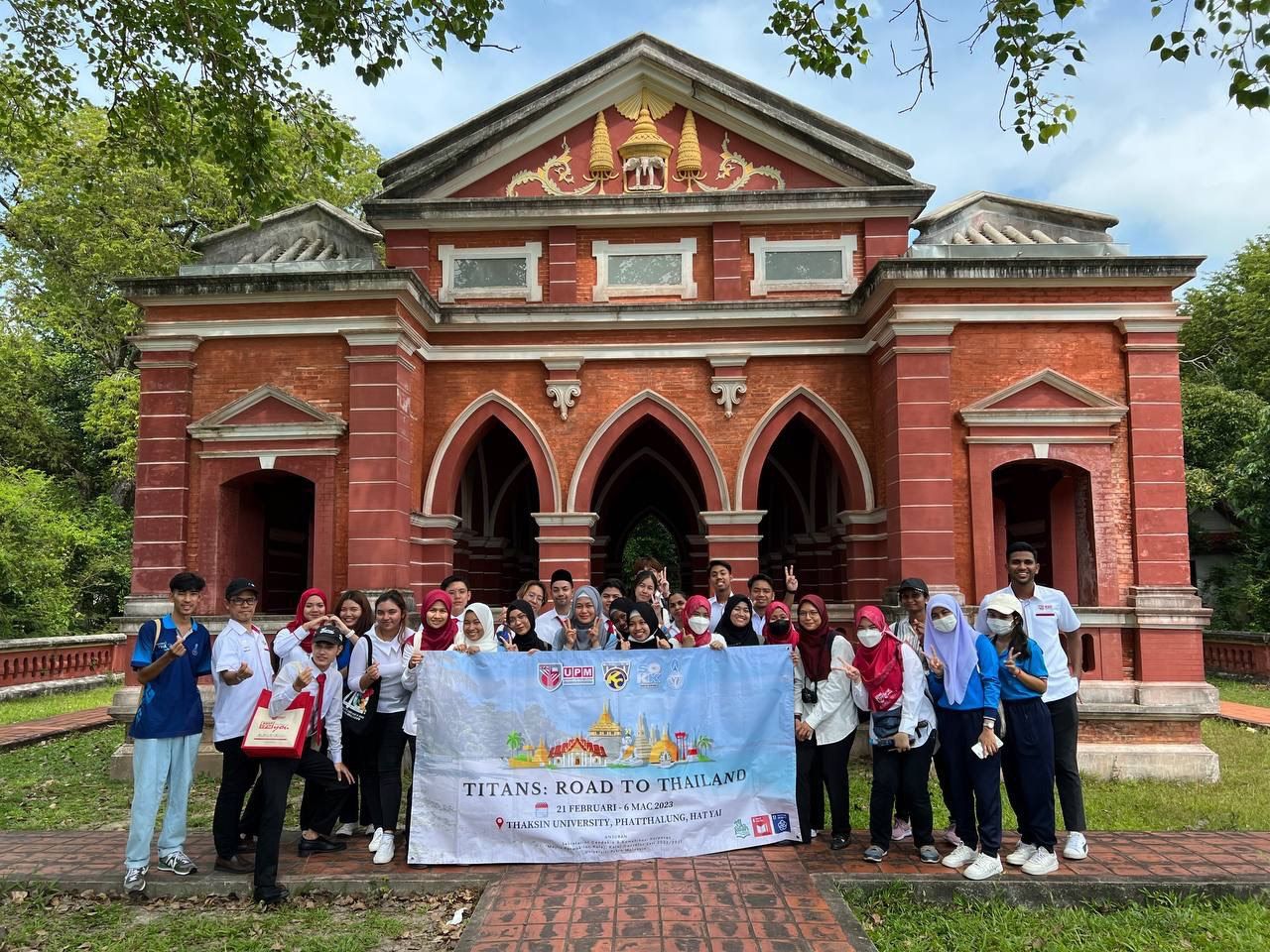
Program Mobiliti TITANS: ROAD TO THAILAND 2023 is the first mobility program after our world was struck by the COVID-19 pandemic. This program is organized by Kolej Canselor and led by student representative Nor Adnin Ezani binti Mohd Ezani as the Program Director, Ammar Haziq bin Mohd Faiz (Deputy Director), and Mohd Iskandar Zulkarnain bin Sukardi (President of the College Representative Council, Kolej Canselor). 19 students from Universiti Putra Malaysia (UPM) actively participated in the program, which was held at Thaksin University, Songkhla, Thailand. 9 students were from Kolej Canselor and 10 from Kolej Sepuluh, Kolej Sultan Alaeddin Sulaiman Shah, and Kolej Empat Belas. The program started on February 21, 2023, with the students departing from Malaysia to Thailand and concluded on March 6, 2023. We were accompanied and guided by two officers, Dr. Amrallah bin Mustafa and Encik Hanis bin Johari. We are very grateful to UPM, the Zakat, Wakaf, and Endowment Center (WAZAN) UPM, and the Putra International Center (i-Putra) UPM for their significant contributions and support in ensuring the success of this program. The main objectives of the TITANS Mobility Program: ROAD TO THAILAND 2023 are cultural exchange with foreign countries and volunteering to clean Samila Beach, Thailand. Additionally, the program aims to foster students in building self-confidence and more effective and efficient communication skills.
On the second day of the program, which was on February 7, 2023, we arrived at Thaksin University Songkhla and were warmly welcomed by Dr. Khwanchit Suwannoppharat from the Office of the Assistant to the President for International Affairs at Thaksin University, along with the students of Thaksin University with great hospitality and open arms. After that, we continued with the first activity, which was an ice-breaking session with the students of Thaksin University. We also engaged in activities together and exchanged ideas to expand our international networking.


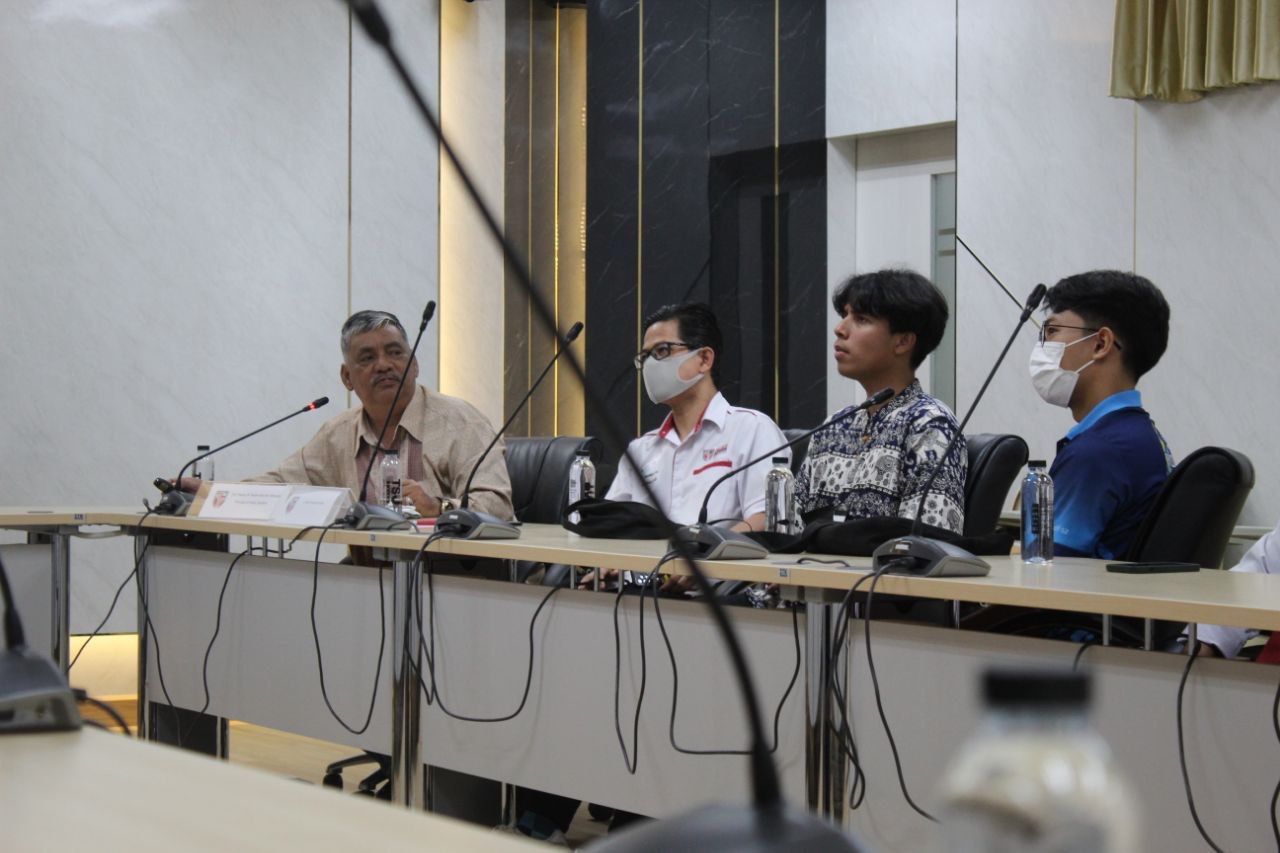
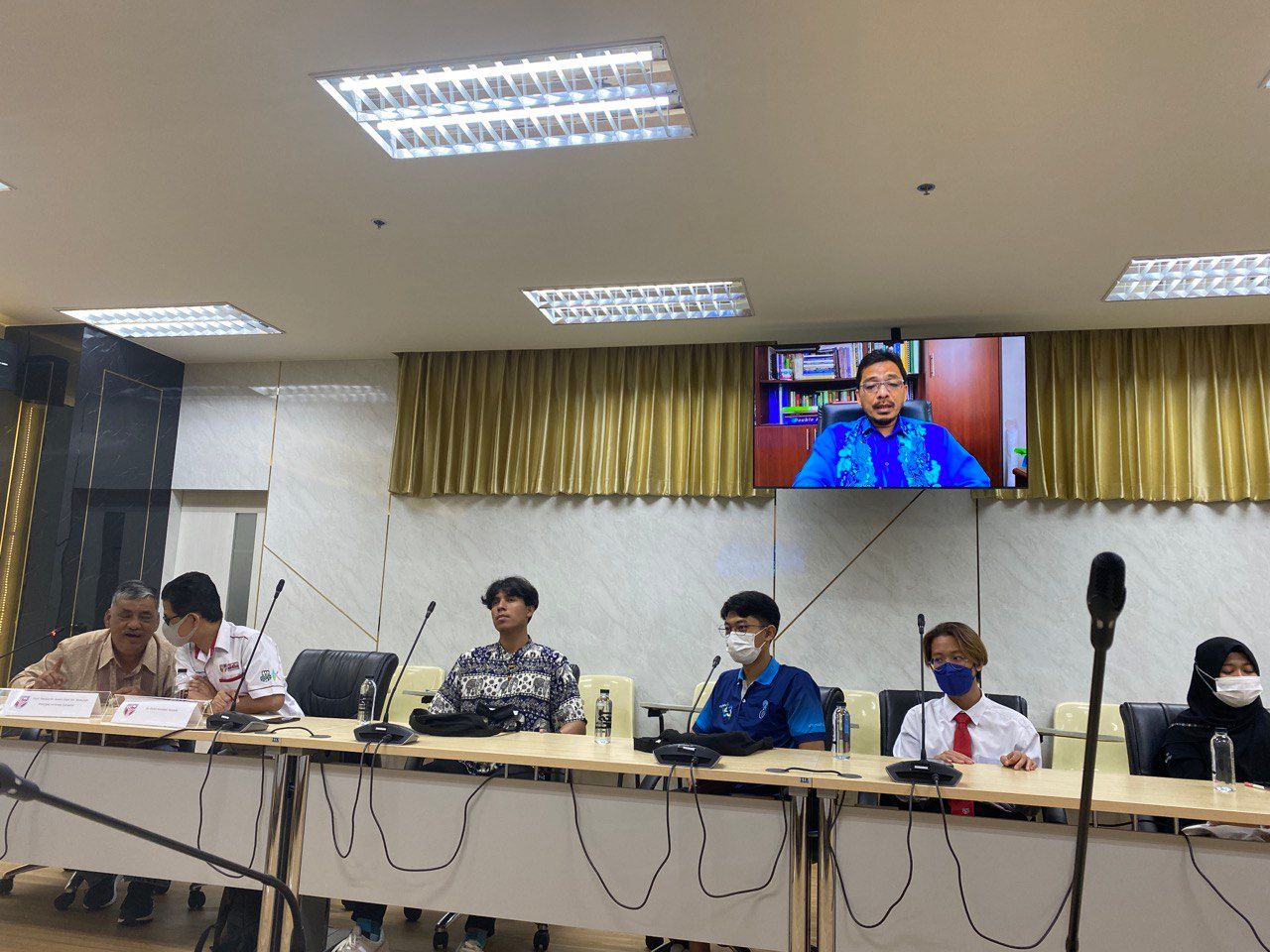
The International Student Conference was one of the activities for exchanging ideas between the two universities on student development. The conference was attended by the Principal of Kolej Canselor, Associate Professor Dr. Amini Amir, who served as the Keynote Speaker on the topic of Student Development and Universiti Putra Malaysia. He shared how the culture at UPM shapes UPM students to become qualified and dedicated human capital. Additionally, Associate Professor Dr. Mohd Daud Awang, Director of the Zakat, Wakaf, and Endowment Management Center (WAZAN) UPM, was the second Keynote Speaker, presenting on the topic of Wakaf and Student Development. He explained how the existence of such organizations helps the underprivileged and poor in pursuing education and opens broader opportunities, such as studying abroad.

(International Student Conference)
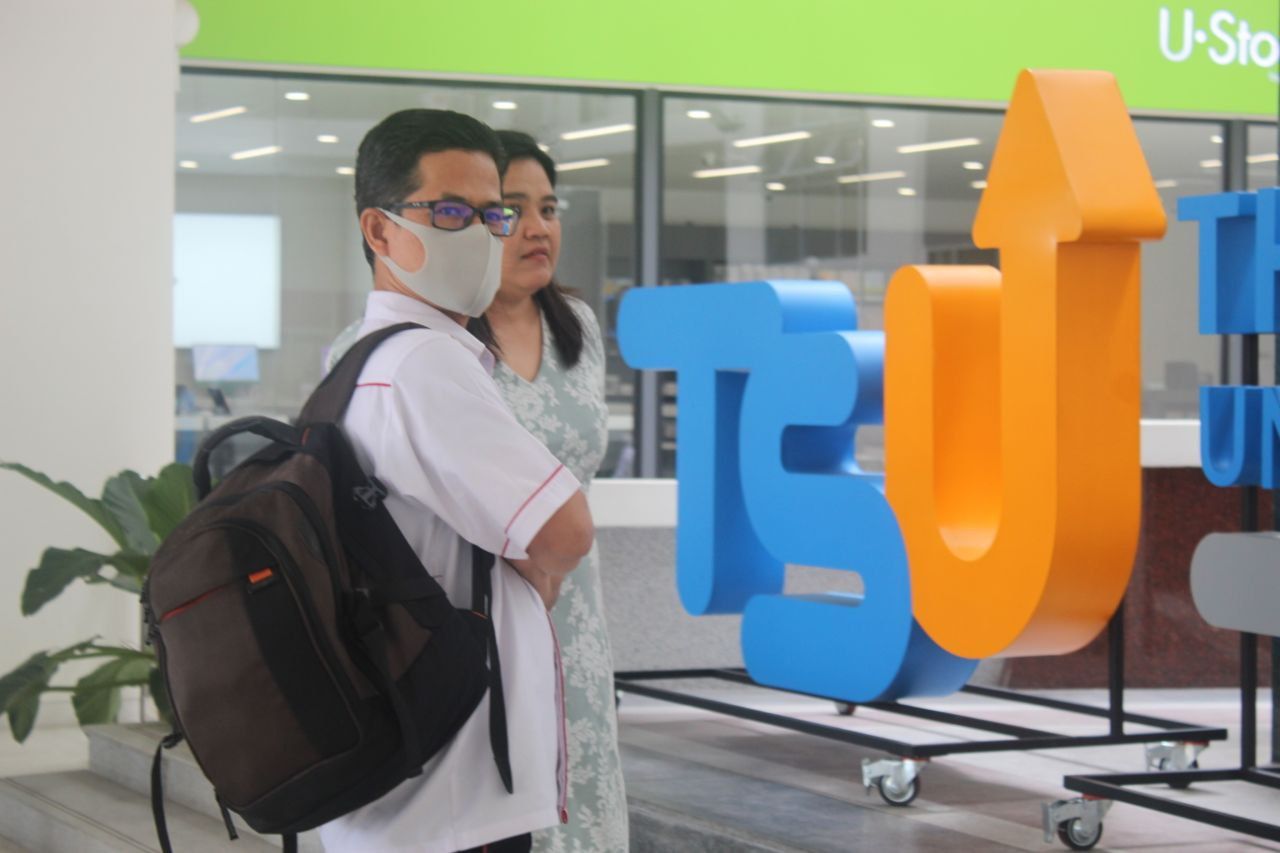
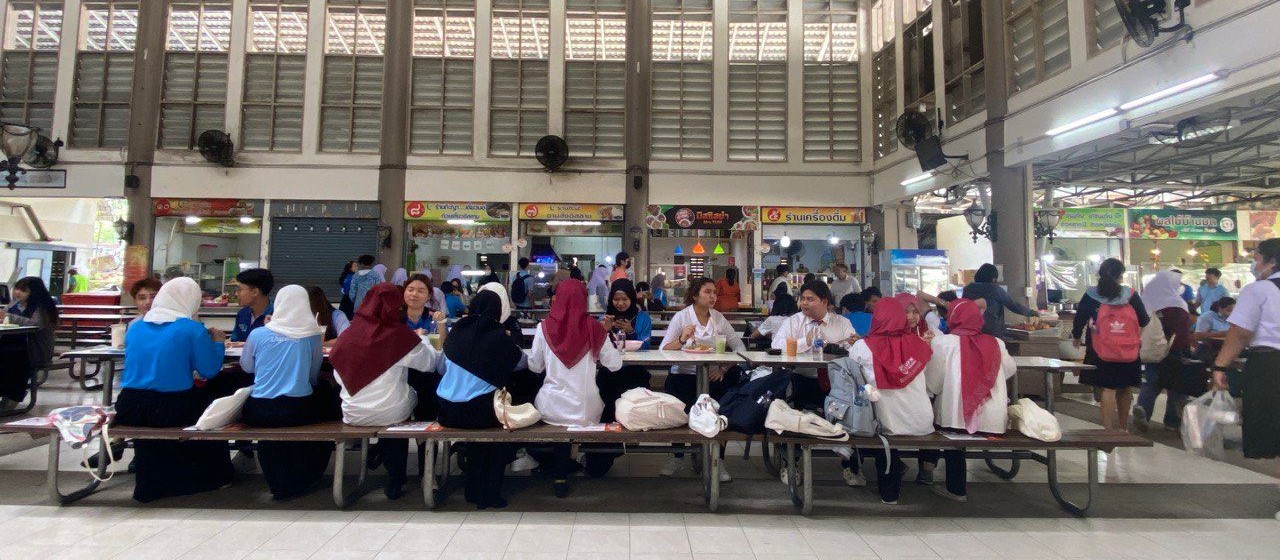
We were taken on a tour around the campus, accompanied by students from Thaksin University, to observe the daily life at the university. Various new cultural aspects that do not exist in Malaysia were introduced to us, and we were shown their learning methods. The culture in Thailand, being different from our country where Muslims are a minority, led to a slightly different lifestyle there. For example, the university canteen has separate sections for halal food, dedicated exclusively for Muslim students, and it is not combined with stalls selling non-halal food. Similarly, the plates used by Muslim students are colorful, while the plates for non-Muslim students are gray. This arrangement not only facilitates the Muslim students but also shows a more inclusive environment for a community consisting of various religions.
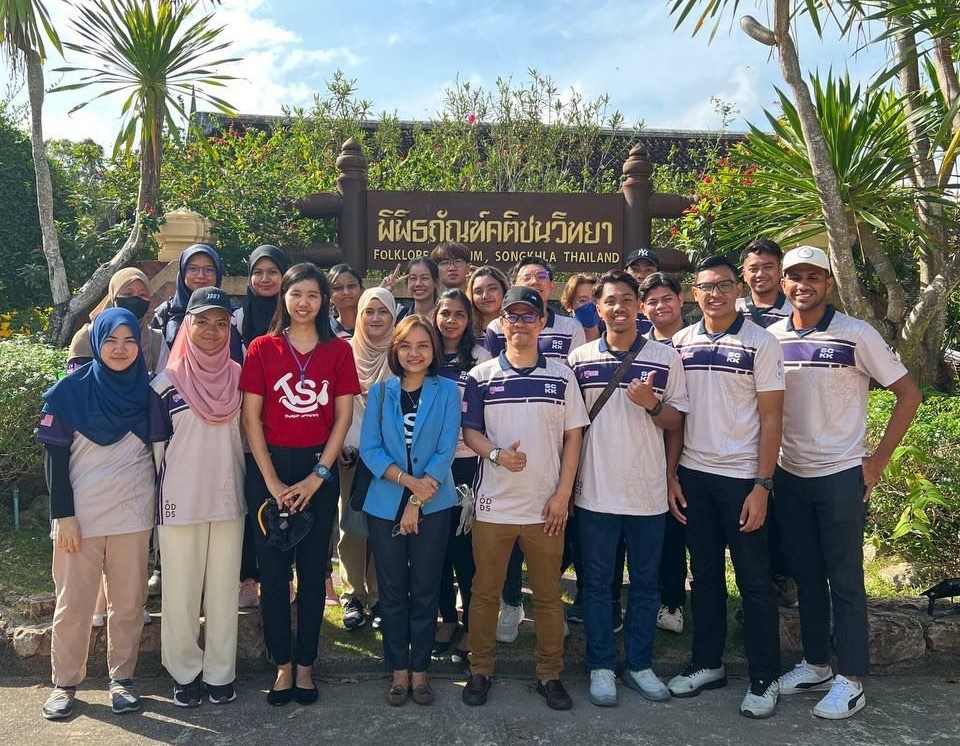
Muzium Folklore Museum The Institute for Southern Thai Studies, Thaksin University merupakan muzium yang menceritakan sejarah penduduk Thailand pada zaman 80-an dan 90-an. Muzium tersebut merupakan hak milik Thaksin University yang bertempatkan di Ko Yo, Thailand. Kami dibawa ke 43 check point termasuklah pengelanan kepada tarian tradisional masyarakat Thailand yang berbeza dengan tarian di Malaysia namun, masyarakat Thailand juga mempunyai Wayang Kulit seperti di negara kita. Perbezaan perkembangan manusia di tempat yang berbza memberikan input yang bermanfaat dan membuatkan para peserta berfikir akan keunikan negara Thailand.

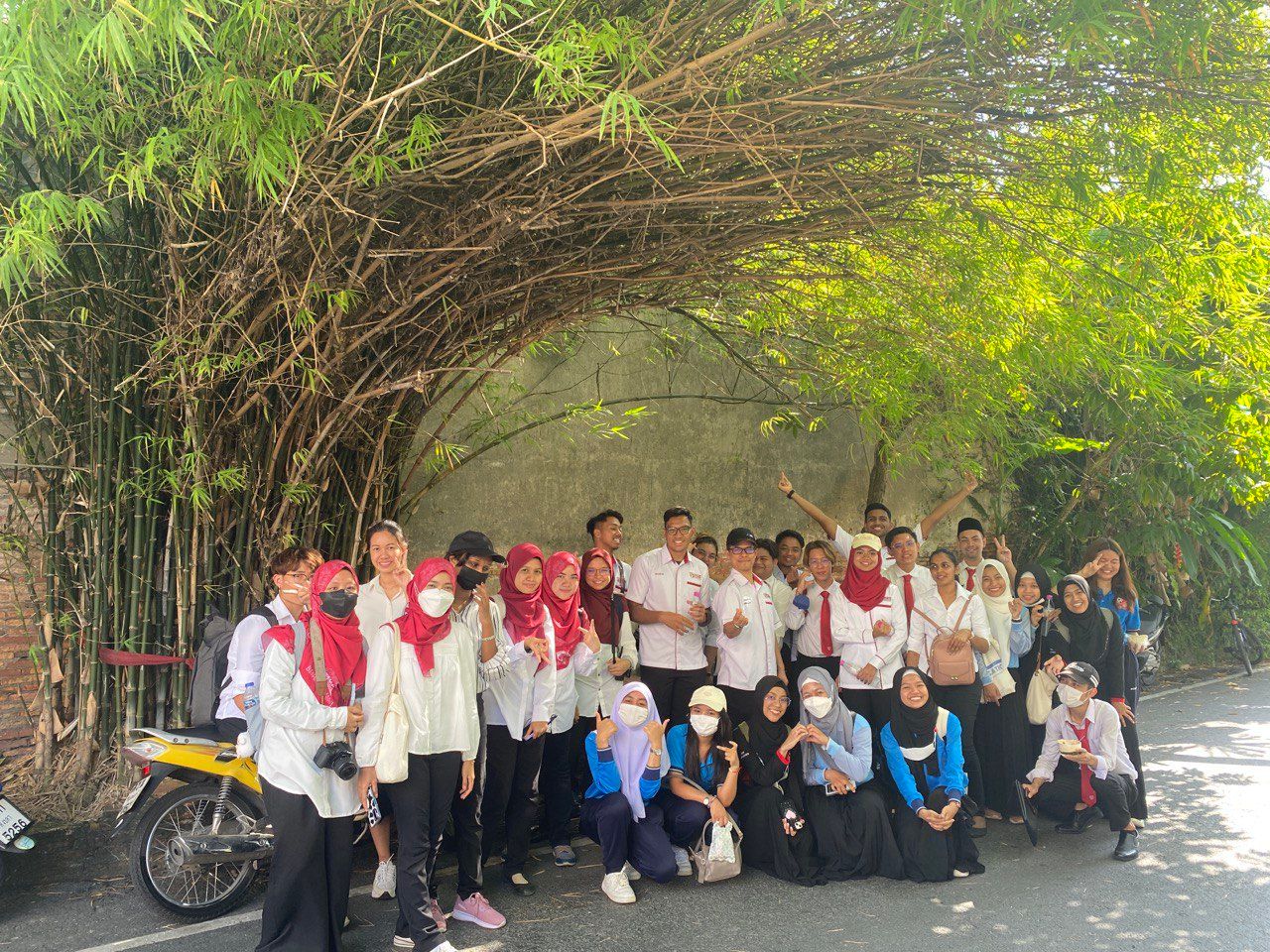
Not only that, but the students of Thaksin University also took the Titans participants to historical locations in an activity called the "Culture Tour" in the Songkhla district. The town of Songkhla is located in southeast Thailand, facing the South China Sea. The architecture of the buildings there reflects the uniqueness and identity of this small town. We walked together with the students of Thaksin University around the town while enjoying the sea views. This provided the participants with a realistic opportunity and knowledge that could be directly experienced.
We also had the opportunity to experience sports activities on the Thaksin University campus. Among the sports contested were badminton, wrestling, football, and volleyball, all held simultaneously. Sports events were usually held at night to avoid disrupting students' class schedules. The sports competitions were organized according to each faculty. Representatives from Thaksin University who were also athletes participated in these sports events. Therefore, we experienced the lively and energetic atmosphere of the sports activities firsthand. The sports here were similar to the College Sports (SUKOL) held at UPM. However, the turnout at this university was higher, and it was mandatory for students to attend and show support and cheer. The facilities at the university amazed us due to their completeness and adequacy, even with many events being held simultaneously.


Volunteering activities were one of the main activities of this program. A volunteer activity for collecting trash was conducted for 2 days at Samila Beach and Songkhla City Park. This activity was held to raise awareness among the public and participants about the importance of maintaining environmental cleanliness, regardless of location. Indirectly, it instilled a sense of love for the environment in each participant. The amount of trash collected at Samila Beach was 30 kilograms, and at Songkhla City Park, it was 35 kilograms.
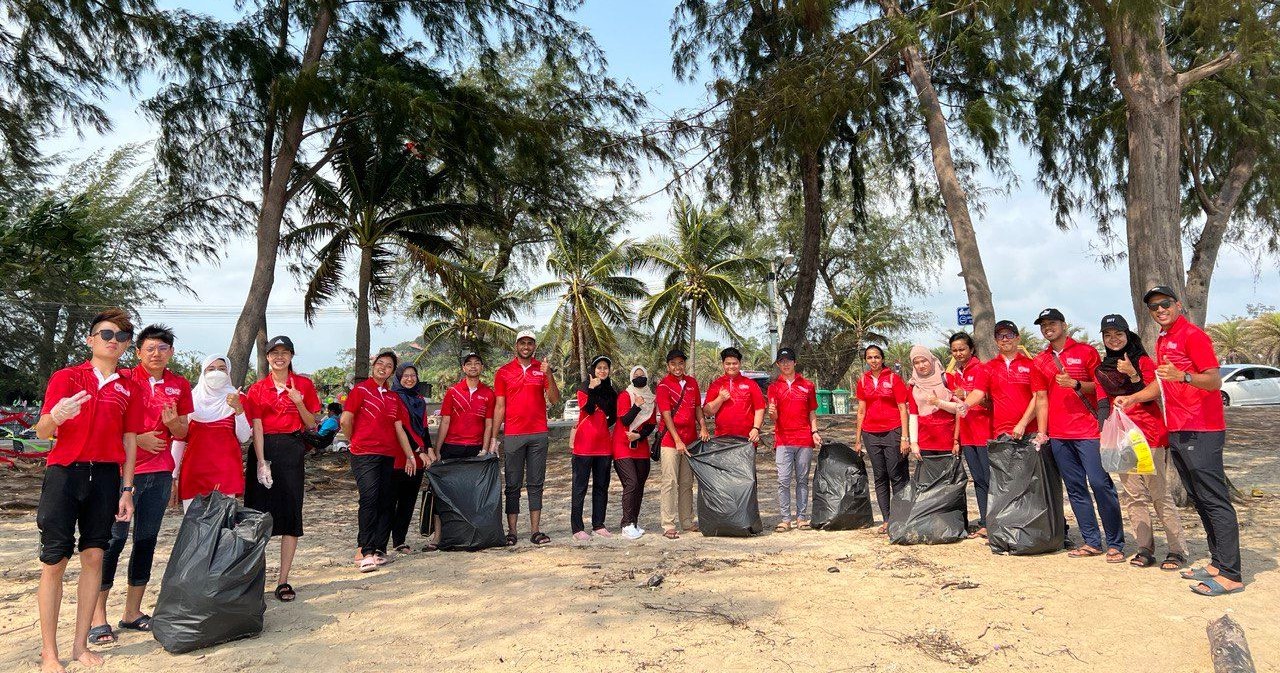
(Volunteerism at Samila Beach)


(Volunteerism at Songkhla City Park)
We also visited various mosques in Songkhla and Hat Yai. We explored several mosques to experience how the Muslim community in Thailand performs their obligatory prayers and the activities conducted in the mosques. The largest mosque we visited in Hat Yai was the Central Mosque of Songkhla Province.


Additionally, a Campus Tour or visits to various faculties were conducted at Prince of Songkla University in Hat Yai, Thailand. During this activity, we learned about the education system in Thailand, particularly in the fields of science and engineering. We observed that they emphasize creativity in education to attract students to learn in more engaging ways. The diverse teaching methods and the facilities provided to students result in a high-quality education. For example, science-related museums and mini-libraries can be found in the Science Faculty, making it easy to access reference books and study materials without needing to go to the main library. Similarly, the Engineering Faculty offers different laboratories tailored to specific areas and skills. Reading materials are also easily accessible in the corridor lounges.


(Faculty of Engineering)


(Faculty of Science)
Finally, we had the opportunity to visit the Malaysian Consulate located in Songkhla, Thailand, known as the Consulate General of Malaysia Songkhla.

During our time in Thailand, we found that the local community was very friendly and welcoming to guests. We received excellent hospitality and felt a close bond with the students of Thaksin University, who spent a lot of time with us. They continued to stay in touch even after we left, though only through social media. They were always enthusiastic about communicating with us, despite the language differences. Generally, some Thai people can speak Malay, whether in the East Coast dialect or Kedah dialect, which somewhat facilitated our communication without relying too much on translators. All the food we tried was delicious from the first day we arrived in Thailand until our last day there. What can be said is that it was a ‘Food Paradise’.
Prepared by,
Director of TITANS: ROAD TO THAILAND 2023,
Nor Adnin Ezani binti Mohd Ezani
Date of Input: 07/08/2024 | Updated: 07/08/2024 | fuziah
MEDIA SHARING










.jpg)